
FARRAH FOR DISTRICT 5
September 2026 Update, Read New Questions and Answers. Thank. you for your vote in advance, you are appreciated.
Quality First
Built on Real Experience
Business Leadership
18+ years running local businesses, understanding Austin's economic heartbeat and fostering growth. I am a business person on a global scale and am a asset to District 5 and all of Texas. I empower youth, give teens opportunities, and care for senior income. I will make you more money with ethical business practices.
Legal & Policy Expertise
UT paralegal certified, driving civic ordinance reform and property tax relief. We are in a golden age and I want to bring everyone with and empower you to use policies in your favor.
Advocate for Families
As a mother and policy advocate, fighting for equal opportunity and a brighter future for all District 5 families. I've impacted two generations of birth rates and historically understand what preventation and support systems need to be in place that are not. I hope everyone can have more peaceful familiy journeys from my TV show's 16 & Pregnant and Teen Mom.
AI
Austin has 50+ data centers bringing vital tech, trade, and engineering jobs to District 5. I support smart development with strict water protections: mandating closed-loop dry cooling systems that eliminate water waste, expanding reclaimed water networks, and requiring large facilities to protect municipal drinking water. We can grow our economy while preserving vital natural resources. All infrastructure and details below for all answers on economic development.
Expert Care
Farming & Tech (Ai Data Centers)
: A Green Future 🚜💡
We're transforming data centers from land-competing footprints into assets that protect water, scale better infrastructure and economic growth safely and support family farms.
Dual-Income Security
Farmers gain stable cash flow by leasing land for solar while continuing to farm, preserving agricultural acreage.
Crop & Water Protection
Solar panels create microclimates, reducing water loss by 30% and protecting shade-tolerant crops during high heat.
Soil & Habitat Boost
Integrating pollinator-friendly native vegetation restores soil health, enhances carbon, and increases nearby crop yields.
Addressing community concerns around data centers—such as resource scarcity, unconsented land use, and rural strain—requires moving away from speculative development toward structured, community-centered infrastructure. Bridging grid technology with local agriculture and regulatory guardrails transforms data centers from land-competing footprints into assets that protect water and support family farms. I also voted so "local communities have a vote and say in Ai Data centers", alike it goes with local city counsel seat duties to help nurture income, education, and economic development and bring my entire community with and win together. District 5 is very much in the city and a great location to embrace taking part in growth as growth is enevitable for our next generations.
THE TECH TEMPER-TANTRUM & LACK OF EDUCATION

1. Agrivoltaics: Empowering Farmers & Preserving Farmland Data center expansion often competes with agricultural land. Agrivoltaics—co-locating solar panels directly over active agricultural operations—bridges energy demand and farming viability:
American Solar Energy Society Dual-Income Security for Farmers: Leasing land for solar arrays while continuing to farm or graze provides long-term, stable cash flow for rural landowners, helping preserve family-owned agricultural acreage. Water Retention & Crop Protection: Solar panel arrays create microclimates that reduce soil evaporation by up to 30%, protecting shade-tolerant crops and vine crops during high-heat conditions.
American Solar Energy Society Soil & Habitat Restoration: Integrating pollinator-friendly native vegetation beneath solar installations improves local biodiversity, enhances soil carbon, and increases nearby crop yields.
Source: American Solar Energy Society
2. Protecting Water Resources & Local Health Unchecked industrial water usage causes psychological and economic scarcity anxiety in local communities. Sustainable infrastructure mandates strict separation between municipal drinking water and cooling operations: Zero-Potable Water Mandates: Data centers must utilize closed-loop liquid cooling, air-cooled dry heat exchangers, or direct-to-chip cooling, eliminating continuous evaporative water loss. Industrial Water Recycling: Connecting directly to municipal reclaimed water networks (such as Austin’s GoPurple system) ensures industrial operations consume non-potable effluent rather than pulling from local aquifer or river supplies. Continuous Environmental Audits: Mandatory, public-facing reporting of water withdrawal and thermal discharge prevents hidden resource depletion and ensures accountability under state regulatory frameworks like the Public Utility Commission of Texas (PUCT).
Source: The Cool Down.
3. Grid-Supportive Sourcing & Financial Protection To ensure large industrial loads do not cause blackouts or inflate residential utility rates: Microgrids & Behind-the-Meter Storage: Co-locating data centers with utility-scale Battery Energy Storage Systems (BESS) allows facilities to draw from stored power during extreme grid stress, serving as grid-stabilizing assets. Demand Response Agreements: Mandatory automated load-shedding shifts heavy, non-critical processing workloads to off-peak hours when renewable energy is abundant. Developer-Funded Infrastructure: Under modern regulatory frameworks (such as Texas SB 6 standards), data center operators must fund 100% of their dedicated grid interconnects and substation upgrades, preventing costs from shifting to residential ratepayers.
Source: compass
Preventing Community Anxiety Through Consent & Notice Community stress and mental crisis tied to industrial growth stem largely from non-transparent site acquisitions, hate edited misinformation click-bate media, the community member not using ai platforms to research all their questions prior to get factual best practices for Ai Data center economic expansions, the community member not have education from school systems prior to meetings, and unannounced zoning changes. Establishing "Consent by Design" requires: Mandatory Public Notice & Buffer Zones: Setting strict setback requirements from residential zones, schools, and historic agricultural districts to eliminate noise pollution and visual disruption. Community Benefit Agreements (CBAs): Requiring binding agreements between data center developers, school districts, and local municipal boards to guarantee local hiring, trade apprenticeships, and direct contributions to local infrastructure before permits are issued.
Texas has great laws already in place, community notice in place, and as someone who has done construction it is rigorous to build, hard to get approval, mandatory site inspections, and mandatory for community notices already.
While some city council members love spreading confusion, increasing scarcity, and making your voice feel small so they can get a rise out of you. I operate to keep my community at peace, transparency, joyful, and flourishing on economic opportunities to empower us to move through each new opportunity to-the- next, to be as productive and happy as possible.
May all of your wildest dreams come true with safety, support and prevention so there is no more crises.
- FA
Real Results
Statement to Central Texas Asian American Community Leaders
A warm hello to those in the AAPI community, I’m Farrah Abraham for District 5, Abraham for Austin, thank you for the opportunity to connect with you all and share my policy positions, support and budget commitments with the vibrant, growing Asian American and Pacific Islander (AAPI) community across Central Texas. Below are my written responses to your primary platform questions and a wonderful AAPI locally owned business recommendation. My daughter and I support AAPI owned businesses daily, in beauty, food, and health care.
1. AAPI Equity & Social Services
Central Texas’s AAPI community is one of our fastest-growing demographics, yet municipal budget allocations have historically lagged behind this growth. True equity requires moving beyond generic outreach and activating productive updates, specifying fund targets, linguistically and culturally specific programs.
- Critical Services Needed:
- Language Access & Navigation: I had the pleasure of helping AAPI seniors to their doctors appointments and I see how expanding full-language translation and interpretation services across municipal departments (Austin Public Health, Housing, and Emergency Management) can aid. We must directly support Community Health Workers (CHWs) and navigators—such as those operating through the Austin Asian Community Health Initiative (AACHI)—to bridge healthcare system complexities for limited English proficiency (LEP) residents.
- Culturally Attuned Mental Healthcare: Supporting and Investing in community-based mental health initiatives, suicide prevention programs, and senior support networks tailored to AAPI cultural contexts to eliminate stigma and improve access (Drive A Senior) a non profit supports this initiative and appreciate volunteers, as I have volunteered with them. As a graduate of a 12 step intensive trauma healing program in the Austin, Texas area, please see your coverage for 12 step trauma centers as they welcome all cultures, work with all community benefits and insurances, Makana Path is highly recommended.
- AAPI Community & Cultural Space: Prioritizing support, funding resources , capital investments and operational funding for the Asian American Resource Center (AARC) expansion to ensure our community has dedicated programming, senior care, and youth development hubs.
- Budget Commitments: I commit to voting for line-items supporting within the Austin Public Health budget dedicated to AAPI community health navigators and language translation. Furthermore, I will advocate for equity-based budgeting matrices across all city departments so that municipal service expansions automatically reflect demographic growth in Central Texas.
2. Public Safety & Immigrant Protection (APD & ICE)
The disconnect between City Council’s anti-cooperation policies and on-the-ground incidents stems directly from complex state mandates—specifically Texas Senate Bill 4 (2017)—and federal database integration.
- Why Coordination Occurs: Under Texas SB 4, municipal law enforcement agencies and local officials are legally prohibited from adopting policies that restrict compliance with federal immigration enforcement or detainer requests, under threat of criminal penalties and loss of state grant funding. Furthermore, federal administrative warrants populated into national databases (such as NCIC) create operational friction for patrol officers responding to routine calls. To abide by laws at local levels please use google translate and or Google Gemini Ai Free and ask it to check laws and blueprints that work for immigration protections so you can advocate specifics so I can help take action and see the best support to help you, blindly acting in generalism does not help me, help you, get a plan that works within the law so we can work productively together on this with clarity.
Legislative & Oversight Steps to Stop Unlawful Stops:
- Strict APD General Orders: I support and enforce updated APD General Orders that strictly prohibit officers from stopping, detaining, or inquiring about an individual’s immigration status, ensuring officers do not execute arrests solely based on civil/administrative ICE warrants.
- Supervisory Authorization & Transparency: Requiring mandatory supervisory approval before any notification to federal authorities can occur, alongside robust public reporting. The city manager and police chief must submit quarterly audit reports tracking all immigration-related inquiries and federal requests.
- Know Your Rights & Legal Defense: I will champion continued municipal funding for the City's Equity & Inclusion Human Rights Division and local legal defense funds. This ensures multilingual "Know Your Rights" materials (in Vietnamese, Chinese, Hindi, Urdu, Burmese, etc.) are distributed so residents know they never have to consent to unlawful searches or questioning.
3. Women’s Healthcare
State-level restrictions on reproductive freedom and specialized care have created significant anxiety for women across Texas, including Asian American women who often face compound barriers related to language, insurance status, and cultural stigma.
- Ensuring Quality Access Regardless of Income or Address:
- Support for Central Health & MAP: I will work closely with Travis County’s healthcare district (Central Health) to expand the Medical Access Program (MAP) and MAP Basic. This provides low-income, uninsured, and underinsured women with comprehensive preventative primary care to avoid crisis, specialized gynecological services, cancer screenings, and maternal care.
- Reproductive & Maternal Health Grants: I support allocating municipal funds toward family planning, prenatal care, prevention support to avoid crisis, contraception, cervical and breast cancer screenings, and maternal mental health support. Please see my website for details on support for brighter futures. farrahabraham.co ( As seen on my link in bio on tikok @farrahabraham and Social Media.
- Protections for Patients and Providers: I will defend municipal resolutions that protect women and healthcare providers that put humanity first, ensuring that Austin remains a safe haven for comprehensive medical care support to avoid crisis. Men are equally looked at not just women and providers, it takes two to tango, to truly support women and providers you must hold men accountable and have equality in the subject.
- Culturally Competent Outreach: Supporting targeted health education seminars—delivered in native languages—to ensure AAPI women are fully aware of available preventive care, routine screenings, and emergency medical resources.
I want to give a recommendation to an AAPI business, LV Nail Lounge at 6501 S Congress, wonderful owners who advocate for the AAPI community in Austin TX.
Thank you for your vote in advance, you are appreciated,
Farrah Abraham
FARRAH FOR AUSTIN TX DISTRICT 5
FARRAH ABRAHAM FOR DISTRICT 5
Farrah Abraham For Austin, DISTRICT 5 Candidate, NOVEMBER 2026
January 14,2026

Fast Facts":
1. "Paperwork vs. Reality": "The City approved the wrong documents despite three attempts by Farrah to provide the correct ones. If City Hall can't get a filing right, how can we trust them with our taxes? Farrah is running to fix that broken system."
2. "Qualifications Matter": "As a UT-certified paralegal and a business owner who handles national contracts, Farrah has the legal literacy to know when a government office has made a mistake. She didn't let them keep the error—she forced the correction."
3. "A Fighter for District 5": "The real story here isn't a 'mishap'; it's about a South Austin mother and entrepreneur who stood up to City Hall's lack of transparency and won. That’s the energy she’s bringing to the City Council.
Administrative Oversight: The confusion regarding the 'Mayor' versus 'District 5' seat stemmed directly from clerical processing at City Hall. Despite Farrah’s team submitting documents three separate times to ensure accuracy, the City approved and published documents for an incorrect election cycle.
• Challenging the System: Farrah proactively challenged the City’s error. Because the City of Austin does not conduct candidate interviews or provide immediate verbal feedback during the filing process, candidates are often at the mercy of how the City Clerk’s office inputs data.
• The Corrected Course: Once the City recognized the administrative misalignment, Farrah’s candidacy was correctly solidified for District 5 City Council (2026)—the seat she is qualified for and ready to win.
Professional history:
Professional & Educational Qualifications
• Paralegal Certification (UT Austin):Abraham has highlighted her legal education, including pursuing a paralegal certification through the University of Texas at Austin, as a core part of her readiness for local government.
• National Contracts & 1099 Experience:With over 17 years in the entertainment and business sectors, she emphasizes her experience managing high-level national contracts and navigating the "modern worker" (1099/freelance) economy. She positions this as a strength for understanding the economic challenges of Austin’s independent workforce.
• Brick-and-Mortar Business Ownership:Having owned and operated physical business locations in the Austin area (such as her previous retail ventures), she campaigns on a platform of "Keeping Austin Fair" for small business owners who face rising costs and regulatory hurdles.
• Serial Entrepreneurship & Masterclasses:Her background as an entrepreneur includes launching various brands and digital educational content (Masterclasses). She cites this "hustle" and business acumen as evidence of her ability to manage city budgets and taxes more effectively than traditional politicians.
Personal Background & Platform
• Motherhood & Advocacy: As a mother to a 17-year-old and a widower, Abraham often speaks about the "blueprint" of her personal life—overcoming hardship to provide for her family—as a reason she is qualified to represent working parents in District 5.
• Policy Focus: Her 2026 campaign site and social media announcements indicate a focus on:
• Housing Crisis: Tackling affordability for Austin families.
• Public Safety: Supporting first responders and increasing investment in specialized units like the Austin SWAT team.
• Government Accountability: Using her experience with "Hollywood drama" and public scrutiny to claim she is "cancel-culture proof" and ready to fight for everyday residents without lobbyist influence.
2026 Election Context
As of January 2026, Farrah Abraham campaign is positioning her as a "survivor mom" and an outsider candidate who understands the financial pressures of the city through the lens of a long-term resident and business owner.
Election Day is November 3, 2026, and her formal filing with the City of Austin was processed in mid-January 2026.
For 13 years, you’ve been my neighbors, my friends, and my business partners. Now, I’m ready to fight for you, let your concerns, voices be heard for our city. From ending the 1099 mortgage trap to modernizing health systems for our Veterans, it’s time for a 'Safety and Policy First' Austin as well family planning equity for all who can procreate with amazing pilot programs that only the city of Austin can start locally with and go national. 🇺🇸
We’re keeping it weird, we’re keeping it welcoming, and we’re building a brighter future. God Bless Austin, Texas. Go longhorns.
Read the full pilot programs proposals below and RSVP will be available www.FarrahAbraham.com
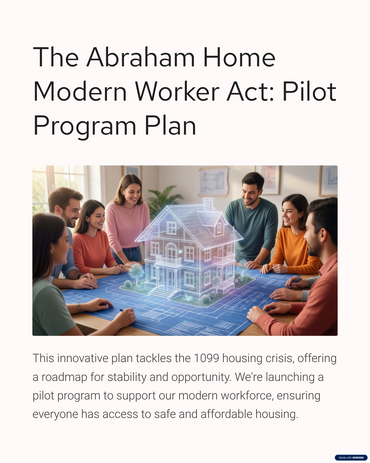
- The Abraham Home Modern Worker Pilot Program.
Why the System is Rigged—And How We Fix It
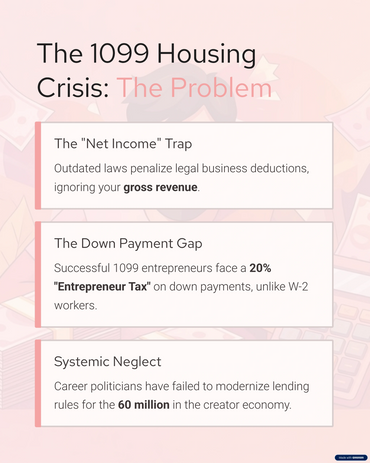
1. The 1099 Housing Crisis (The Problem)
• The "Net Income" Trap: Current 2008-era laws ignore your gross revenue, penalizing you for legal business deductions. Rentals use bank statements looking at all income, banks statement loans should be treated no different with Jumbo loan housing percentages (not fair from rent to home ownership).
• The Down Payment Gap: While W-2 workers get 3% down, successful 1099 entrepreneurs are often forced to pay 20%—the "Entrepreneur Tax".
• Systemic Neglect: Career politicians have failed to modernize lending rules for the 60 million people in the creator economy.
-The Abraham Home Modern Worker Act (The Solution)
• Bank Statement Verification: Mandates that lenders accept 24 months of verified bank deposits as a "Safe Harbor" for income.
• Equality in Entry: Opens 3.5% down payment options to self-employed workers with proven cash flow, for all “first time” home buyer applicants are treated equally with inclusion instead at jumbo loan rates for not jumbo house prices. Not Fair.
• Federal Protection: Amends the Equal Credit Opportunity Act to make "employment type" a protected status against discrimination.
The "The Abraham Home Modern Worker Act" Pipeline
Purpose: To demystify the mortgage process for the self-employed and highlight where your policy "bends the line" toward approval.
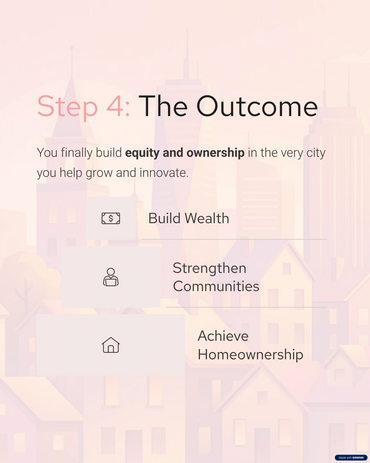
• Step 1: The Modern Documentation – Instead of tax returns that hide your success, we use 24 months of bank statement deposits to show your true revenue.
• Step 2: The "Safe Harbor" Protection – Under the Abraham Home Act, lenders are legally protected when they use these alternative income models.
• Step 3: The Equality Entry – You gain access to 0% - 3.5% down payment programs previously reserved for W-2 workers, regardless of your 1099 status.
• Step 4: The Outcome – You build equity and ownership in the city you help grow.
MayorAbraham.Vote for more Vote Nov.3 2026
Mayor Farrah Abraham 2026 Keep It Weird
2. The Abraham Brighter Futures Initiative (The Austin Pilot PROGRAM )
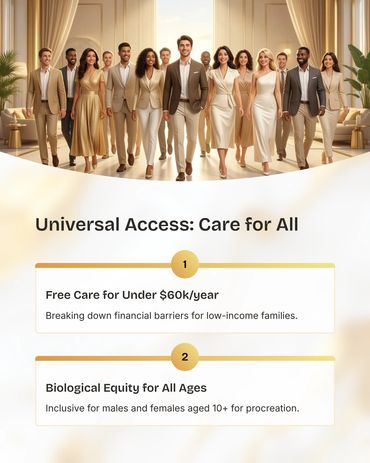
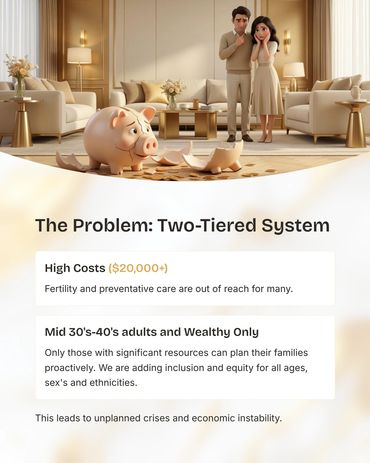
• Cost-Capped Care: Limits out-of-pocket costs for fertility preservation and preventative care to $200 for working families.
• Universal Access: Provides free care for those earning under $60k/year to ensure biological equity for all humans male and female who can procreate ages 10+.
• Local Leadership: Uses city grants to partner with Austin clinics, proving the model works.
• The Problem Side (The Status Quo): High costs (up to $20,000+) create a "two-tiered system" where only the wealthy can plan their families and prevent crisis.
• The Solution Side (The Abraham Brighter Futures Plan): A PILOT PROGRAM: A $200 price cap for working families and free access for those earning under $60k a year for all who procreate age 10+ up.
• The Economic Result: 98% reduction in unplanned crises and a 10-year projected spike in local workforce retention. This applies to all family planning health, wellness and all types of families for equity and inclusion for all men and women.
3. Veteran Health Bridge & Transition Pilot Program
This program addresses the three primary friction points veterans encounter when moving to a high-tech hub like Austin:
The "Health Bridge" (Immediate Care Access)
• The Problem: Many veterans experience a 60–90 day delay in VA benefits processing when relocating or transitioning, leaving them without consistent mental or physical health coverage.
• The Solution: A city-funded temporary health subsidy that "bridges" the gap. It provides immediate access to Austin-based private providers and mental health specialists for the first 100 days post-discharge, ensuring no veteran is left without care while federal paperwork processes.
4. Safety & Policy First: End petty theft to avoid store closures, police should arrive on seen beyond an online police report or we enable petty crimes which does not hold anyone accountable and leaves private and public areas unsafe in District 5 and Austin TX. Everyone complaines about police not showing up for car accidents (needed for most insurance claims), Non Blood police calls need to be enables and voted in to make Austin safer.
5. Abraham's Survivor- First Pilot- Your Voice, Your truth. As a survivor, Implementing 30-day forensic, turnarounds, documentation accuracy, and removing statues of limitations.
6. Senior Houseing ATX Cares- Safe Dignified living that meets "up-to-code" health codes and conditions. ( mold is not good for our seniors). Our elders live their final years in a healthy environment.
SAFETY, INCLUSION & PROSPERITY FOR ALL. VOTE FARRAH ABRAHAM DISTRICT 5, AUSTIN TX.

REGISTER TO VOTE NOW & TAKE PART

VOTE FARRAH ABRAHAM FOR AUSTIN TX
Fast Facts":
1. "Paperwork vs. Reality": "The City approved the wrong documents despite three attempts by Farrah to provide the correct ones. If City Hall can't get a filing right, how can we trust them with our taxes? Farrah is running to fix that broken system."
2. "Qualifications Matter": "As a UT-certified paralegal and a business owner who handles national contracts, Farrah has the legal literacy to know when a government office has made a mistake. She didn't let them keep the error—she forced the correction."
3. "A Fighter for District 5": "The real story here isn't a 'mishap'; it's about